Long before Spring Festival became a holiday of red envelopes and fireworks, Chinese families prepared for the new year by pasting fresh pictures on their doors. These were not ordinary decorations. They were guardians, invitations, and wishes pressed into paper.
New Year prints, or nianhua (年画), are one of China's most beloved folk arts. Printed from carved woodblocks and painted by hand, they turn doorways into altars of hope.
Guardians of the door
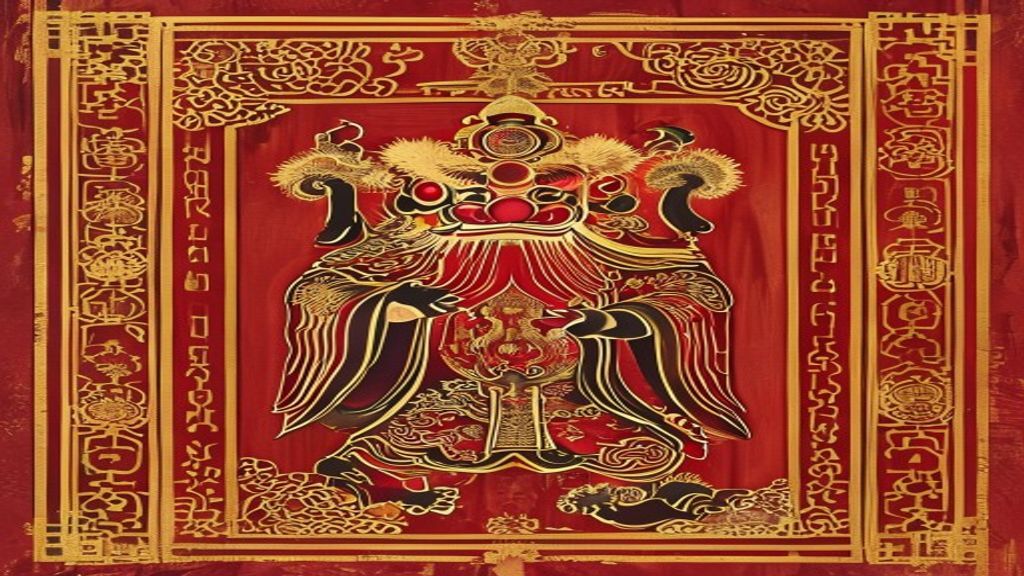
The earliest New Year images were door gods, or menshen (门神). According to legend, two Tang dynasty generals, Qin Shubao and Yuchi Gong, stood guard outside the emperor's bedroom to protect him from ghosts. Their images became the template for door guardians across China.
Families pasted paired images of fierce warriors on their front doors facing outward. The message was simple: no evil spirit may enter here. Over time, the warriors were joined by other protective figures, including Zhong Kui, a scholar-demon known for catching ghosts.
From temples to homes
New Year prints began in religious settings. Temples produced images of gods for devotees to take home. By the Song dynasty, commercial printers had turned the practice into a popular industry. Every winter, traveling sellers carried rolls of prints from village to village.
The prints were cheap enough for ordinary families to buy new ones every year. Replacing them at New Year was part of the ritual: out with the old, in with the new, and the doorway fresh with blessings.
Popular subjects
Beyond door gods, New Year prints featured a wide range of lucky images:
- The God of Wealth: to bring prosperity
- The God of Longevity: to bless elders
- Children holding fish or lotus: to wish for sons and abundance
- Plump babies: to celebrate fertility and family continuity
- Rooster or peony: symbols of good fortune and wealth
Many prints used puns. A picture of a child riding a carp might mean "abundance year after year." A vase with a spear might mean "peace and safety."
Famous centers
Several towns became famous for their print styles:
- Yangliuqing near Tianjin: delicate hand-painted details over woodblock outlines
- Taohuawu in Suzhou: elegant city scenes and opera figures
- Mianzhu in Sichuan: bold colors and dramatic storytelling
- Weifang in Shandong: bright, simple prints for rural markets
Each center developed its own colors, themes, and carving techniques, making New Year prints a national art with strong local accents.