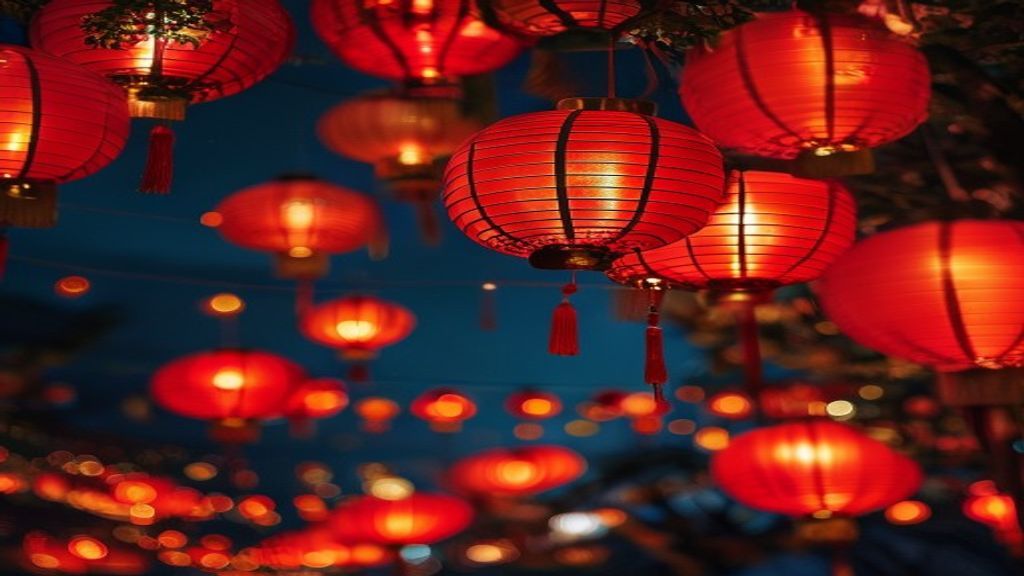
The fifteenth day of the Lunar New Year is the first full moon of the year. In China, that night belongs to the Lantern Festival, when families gather, eat tangyuan, and walk among thousands of glowing lanterns.
It is one of the most beautiful nights in the Chinese calendar. But the lanterns are doing more than decorating the streets. They are a language of light.
Light at the start of the year
Lanterns have been part of Chinese festivals for at least two thousand years. Early lanterns were simple: paper or silk stretched over a bamboo frame, with a candle inside. Over time, they became more elaborate, taking the shapes of animals, flowers, palace halls, and even whole landscapes.
The light of the lantern symbolized many things at once: the return of longer days, the warmth of family, the hope for a bright year, and the guidance of ancestors and spirits.
Riddle games and reunion
One of the most beloved Lantern Festival customs is guessing riddles. Small strips of paper with poems or word puzzles are tied to lanterns. Correct guesses win small prizes. The riddles often rely on homophones and classical references, turning the festival into a public game of language.
The round white tangyuan eaten on this night also carries meaning. Their shape echoes the full moon, and their name sounds like "reunion" in Chinese. Eating them together is a wish for the family to stay whole.
Regional lantern styles
Different parts of China developed their own lantern traditions:
- Sichuan: large silk lanterns with painted scenes and moving parts
- Hebei: bold, red paper lanterns for doorways
- Suzhou: delicate palace lanterns with carved wood and colored glass
- Guangdong: dragon lanterns carried in parades
Today, electric lights have replaced candles in most festival lanterns, but the shapes and meanings remain. In an age of neon signs, the soft glow of a paper lantern still feels like a reminder of something older and slower.