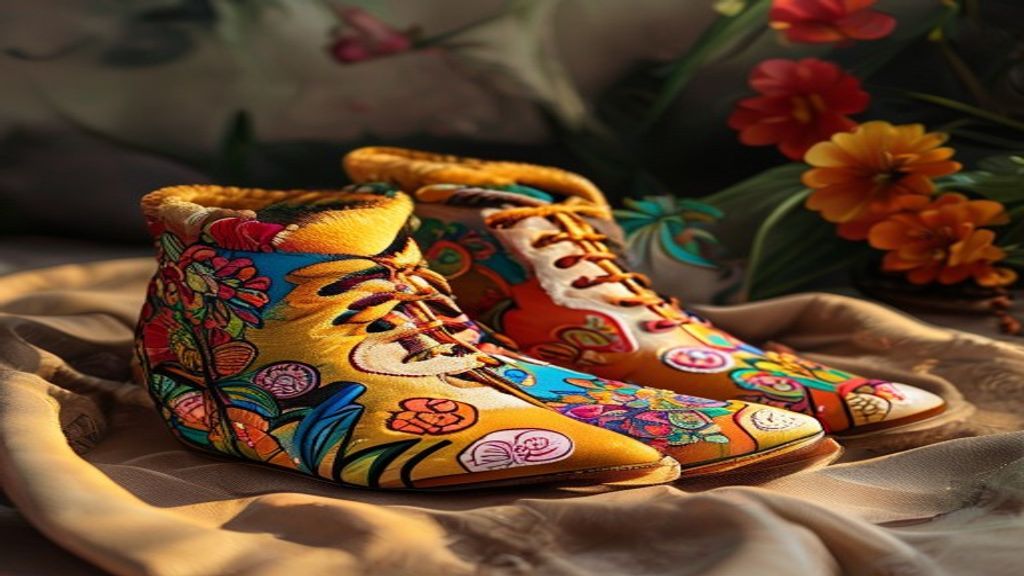
Chinese embroidery is one of the country's oldest textile arts. For more than two thousand years, needleworkers have used silk thread to create images so fine they look like paintings. Over time, four major regional styles emerged, each with its own character.
Su embroidery
Su embroidery comes from Suzhou and the surrounding Jiangnan region. It is famous for its delicacy and realism. Needleworkers use extremely fine silk threads and subtle color gradations to create images of flowers, birds, and landscapes that seem almost alive. A single square inch can contain hundreds of stitches.
Xiang embroidery
Xiang embroidery developed in Hunan province. It is known for bold subjects, especially tigers and lions. The stitchers use a special technique that makes the animal's fur look thick and dimensional. Xiang embroidery often has a more dramatic, painterly quality than the refined Su style.
Yue embroidery
Yue embroidery comes from Guangdong province in the south. It is colorful and decorative, often using gold and silver threads. Traditional subjects include dragons, phoenixes, and flowers. Yue embroidery was heavily influenced by trade with Southeast Asia and Europe, so it sometimes includes foreign motifs and materials.
Shu embroidery
Shu embroidery originates from Sichuan province. It is one of the oldest styles, with roots in the ancient Shu kingdom. Shu embroidery is known for its bright colors, smooth stitching, and local themes such as pandas, lotus flowers, and mountain landscapes.
Together, these four schools show how a single art form can express the personality of a place.